

Marlon – Store keeper
Meet Marlon, a storekeeper in a manufacturing company, responsible for warehouse inventory, raw materials, spare parts, finished goods, stock accuracy and production-critical material availability.
This character page introduces his role, his background, his warehouse routines, his use of SAP Inventory Management, and the operational decisions that make storekeeping essential to industrial performance.
Description
Marlon is the storekeeper of Northbridge Components, keeping stock accurate, bin locations reliable and production-critical materials available on time. At this large manufacturing company, warehouse discipline and material availability directly support production performance.
He manages the daily flow of raw materials, finished goods, spare parts and production supplies. His role is not limited to storing items on shelves. He connects the physical warehouse with ERP inventory data, production needs, procurement follow-up and quality control decisions.
- Control stock movements, receipts, issues, returns and transfers.
- Protect production from material shortages and wrong stock locations.
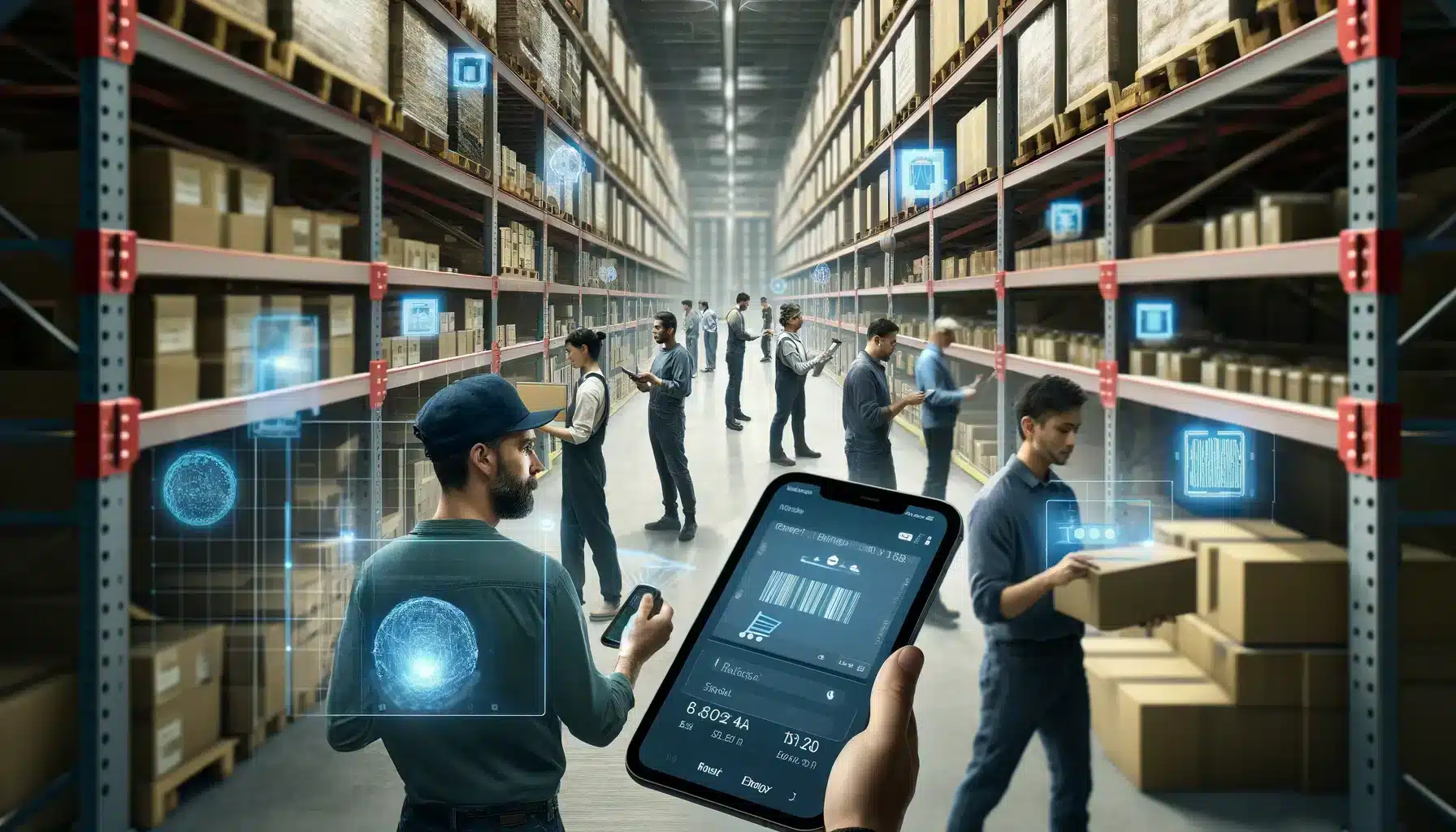
- Use SAP Inventory Management, scanning technology and warehouse reports to improve stock accuracy.
Who is Marlon?
Marlon is an experienced manufacturing storekeeper. He works close to the shop floor, where missing materials, damaged goods, wrong locations or inaccurate ERP quantities can quickly become production problems.
At Northbridge Components, Marlon is responsible for making sure the right material is available, in the right quantity, in the right location, at the right time. He checks physical stock, follows inventory records, prepares production requests, supports urgent needs and keeps warehouse information reliable.
His work is practical, but highly strategic. A single misplaced component can delay a production order. A wrong stock quantity can create false availability. A delayed receipt can generate a material shortage. This is why Marlon’s role is central to warehouse inventory control and industrial continuity.
Background
Marlon did not become a storekeeper by accident. His career was built on the warehouse floor, where he learned inventory management through physical work, operational pressure and daily contact with production teams. From the start, he understood storekeeping not as moving boxes, but as protecting the moment when the system says a part exists and the production floor needs proof.
Education
In 2016, Marlon completed a vocational training program in logistics and warehouse operations. The program gave him the practical foundation of the trade: goods receipt, delivery note checks, order preparation, pallet labelling and safe storage discipline. Beyond the tasks themselves, the training shaped a mindset he still applies every day — that a warehouse is only as reliable as the discipline behind each movement, and that stock accuracy is the result of thousands of small, correct actions rather than a single number in a system.
It also introduced him to the elements that structure his work today: stock movements, bin locations, cycle counts and the constant reconciliation between ERP records and real warehouse quantities. He learned early that the difference between “available in the system” and “available on the shelf” is not a detail — it is the starting point of every serious warehouse investigation.
Career progression
The same year, in 2016, Marlon joined a regional distribution company as a warehouse operator. His first tasks were simple but essential: unloading trucks, checking delivery notes, preparing orders, labelling pallets and keeping storage areas clean, organised and safe. This is where he built the physical reflexes of the job — handling discipline, location logic and respect for the rules that keep a busy warehouse from turning into confusion.
From 2016 to 2019, he moved into goods receipt and shipping. This period gave him a strong understanding of incoming goods control: cross-checking delivery notes against purchase orders, identifying supplier delivery discrepancies, managing partial deliveries, reading packing lists, segregating damaged goods and keeping warehouse documentation clean. He learned, often the hard way, that a small receiving error — a wrong quantity accepted, a vague put-away comment, a missed location update — can create major problems later in production or customer delivery.
From 2019 to 2021, Marlon moved into stock control and production storekeeping in a manufacturing environment. He managed raw materials, consumables and spare parts used by production teams, and became fluent in stock movements, bin locations, internal material requests, inventory adjustments and cycle counts. This is where his role fundamentally changed: he was no longer only moving material, he was verifying whether the physical stock matched the inventory system. He learned to investigate the gap between ERP quantities and real warehouse quantities, and saw first-hand how inaccurate stock data creates false availability, material shortages and emergency purchasing.
Working closer to the shop floor, he supported production orders directly — preparing components for manufacturing, issuing materials to work orders, handling urgent requests and following missing parts with procurement and planners. He developed strong habits in material availability and shortage follow-up: he learned to check the item reference, the expected location, the last movement, the purchase order status and the possible production impact before escalating, so that uncertainty became a clear status rather than a rumour. In the same period he worked with more structured processes, using SAP Inventory Management, barcode scanning, cycle count reports and stock accuracy indicators to reconcile ERP data with physical inventory and reduce recurring discrepancies. He also contributed to warehouse improvement work: tighter location discipline, clearer material identification, stronger receiving checks, more reliable cycle counting, and better communication between warehouse, production, procurement and quality teams.
In 2021, Marlon joined Northbridge Components as an experienced storekeeper. The company needed someone able to manage warehouse reality with industrial discipline: raw materials, finished goods, spare parts, damaged goods, production-critical items and urgent material flows — and to keep inventory data trustworthy enough to support planning, purchasing and production decisions.
Today, Marlon keeps warehouse operations reliable at Northbridge Components. He controls receipts, issues, returns and transfers, checks physical quantities, updates SAP inventory records promptly and supports production requests before shortages become delays. When a discrepancy appears, he works it as an investigation — item reference, expected location, actual location, ERP quantity, physical quantity, last movement, production impact, owner and next action — and he keeps a simple follow-up file that turns scattered questions into controlled actions. He treats a quality hold as a status, not a number: a part received is not always a part available for production.
His background gives him a practical but data-driven vision of storekeeping. He understands both sides of the job: the physical warehouse, where parts must be found and handled correctly, and the ERP system, where inventory data must be accurate enough to support planning, purchasing and production decisions.
Actual Job – Store Keeper
Marlon’s position belongs to the Supply Chain and warehouse operations area. His work is connected to several industrial functions: production, procurement, logistics, quality, maintenance and inventory management.
As a storekeeper, Marlon receives goods from suppliers, stores materials, prepares internal requests, manages stock movements, follows returns, supports cycle counting and reports inventory discrepancies. He also contributes to safety by ensuring that warehouse equipment, handling practices and storage rules are respected.
His daily work is linked to several key warehouse activities:
- Goods receipt: checking deliveries, quantities, references and damaged goods.
- Stock location control: making sure items are stored in the correct warehouse location.
- Material issue: preparing components and supplies for production orders.
- Cycle count: comparing ERP quantity with physical quantity and correcting discrepancies.
- Shortage follow-up: identifying missing materials and supporting recovery actions.
- Warehouse reporting: updating inventory reports and communicating operational risks.
Marlon’s Personality
Marlon is calm, practical and reliable. He does not overcomplicate warehouse problems. He starts with the facts: item reference, quantity, location, movement history, production impact and next action.
Under pressure, he stays focused. If production is waiting for a critical part, he checks the stock record, verifies the warehouse area, contacts the right teams and looks for a realistic recovery plan. He prefers clear action to vague explanations.
He is also careful about safety and staff training. He understands that a warehouse is not only a place where goods are stored. It is a working environment with handling risks, forklift activity, urgent movements, quality constraints and operational pressure.
Download Marlon’s Story
Explore Marlon’s journey through a short business story set inside Northbridge Components. This downloadable story gives a more concrete view of his daily warehouse decisions, his pressure points, his operational routines and his role in protecting production from stock issues.
Related Storekeeper Resources
To understand Marlon’s role in more detail, continue with the related storekeeper resources:
Additional information
| Human Ressource |
|---|


